
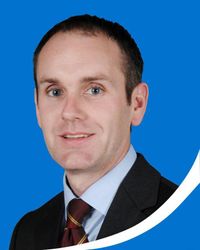
Connor Green, MD
Orthopedic Surgery
Highlights
Age Groups Seen
- Adult >18
Languages
- English
Gender
MaleProvider Organizations
- LifeBridge Health Medical Group
About
Professional Statement
Dr. Connor Green is a fellowship-trained pediatric orthopaedic surgeon joining the International Center for Limb Lengthening (ICLL) at Sinai Hospital, part of LifeBridge Health, in Baltimore, Maryland. His clinical practice focuses on congenital and acquired limb deformity, limb length discrepancy, limb reconstruction, and hip preservation, including developmental dysplasia of the hip, Perthes disease, and adolescent hip pathology.
Dr. Green trained in medicine at University College Dublin (MB BCh BAO, 2004) and completed his higher surgical training in Trauma and Orthopaedics through the Royal College of Surgeons in Ireland. He returns to ICLL having completed his original fellowship in Limb Lengthening and Reconstruction there in 2014–2015, mentored by Dr. John Herzenberg, Dr. Shawn Standard, and Dr. Janet Conway, and having gone on to complete a further fellowship in Pediatric Orthopedic Surgery and Scoliosis at Texas Scottish Rite Hospital for Children in Dallas. He also holds an MCh in Surgery and an MSc in Healthcare Informatics from University College Dublin, is completing a PhD in Biomedical Engineering there), and recently completed a Postgraduate Diploma in Human Factors in Patient Safety at the Royal College of Surgeons in Ireland.
Dr. Green is an active member of the International Perthes Study Group, the Limb Lengthening and Reconstruction Society, and the Hip Dysplasia Institute, and has volunteered his surgical expertise on mission trips.
His research interests span hip morphology and hip preservation, outcomes measurement in pediatric orthopaedics, and engineering-enabled approaches to orthopaedic care, including image analysis and preoperative planning tools. He has authored nearly 40 peer-reviewed articles, review papers, and case reports, as well as two book chapters, and actively supervises graduate research at UCD.
Philosophy of care: Dr. Green believes in fully involving young patients in their own care and presenting all treatment options to both the child and family. While the approach chosen should always be evidence-based, it should also fit with how the child and family wish for their care to be delivered.
CONDITIONS TREATED
(Pediatric patients, birth through 17 years 11 months, unless otherwise noted)
1. HIP, PELVIS & PROXIMAL FEMUR
Developmental and congenital: developmental dysplasia of the hip (DDH), tetralogic hip problems, residual acetabular dysplasia, hip subluxation, hip dislocation, coxa vara, coxa valga, femoral anteversion, femoral retroversion, proximal femoral focal deficiency (PFFD), congenital short femur, congenital hip deformity, hip contracture.
Adolescent hip preservation: trochanteric overgrowth, femoroacetabular impingement (FAI), cam deformity, pincer deformity, labral-related structural hip disease, acetabular retroversion, hip instability, borderline dysplasia, residual childhood hip deformity, hip pain in the child/adolescent athlete, groin pain of likely hip origin.
Perthes and avascular conditions: Legg-Calvé-Perthes disease (active, residual, and healed), avascular necrosis, femoral head collapse or loss of containment after Perthes disease.
SCFE and slipped epiphysis: slipped capital femoral epiphysis (stable follow-up and residual deformity), impingement after SCFE. (Acute SCFE follows the trauma pathway.)
Other hip: limp of suspected hip origin, painful stiff hip, hip synovitis/inflammatory hip disease requiring surgery, hip incongruence, proximal femoral deformity, complex hip second opinions.
2. LIMB LENGTH DISCREPANCY & RECONSTRUCTION
Congenital deficiency: fibular hemimelia, tibial hemimelia, congenital femoral deficiency, PFFD, congenital short tibia, congenital short fibula, congenital upper-limb shortening, congenital limb asymmetry, longitudinal deficiency syndromes.
Acquired deficiency: limb shortening or bone loss after trauma, infection, or tumour resection; growth plate arrest with shortening.
Limb length discrepancy: leg length discrepancy, arm length discrepancy, functional limb asymmetry.
Reconstruction referrals: lengthening candidate assessment, internal lengthening nail suitability, reconstruction second opinions.
3. ANGULAR, ROTATIONAL & DEFORMITY CORRECTION
Coronal deformity: genu valgum (knock knees), genu varum (bow legs), Blount disease, distal femoral valgus, tibial valgus, tibial varus, asymmetric leg alignment.
Sagittal deformity: procurvatum, recurvatum, knee flexion deformity, tibial sagittal deformity.
Torsional deformity: femoral anteversion, external femoral torsion, internal/external tibial torsion, intoeing and outtoeing gait.
Complex/post-traumatic: multiapical deformity, post-traumatic malalignment, growth disturbance deformity, malunion requiring correction.
4. KNEE (SKELETALLY IMMATURE)
Patellar instability (under 12): recurrent patellar instability, patellar dislocation, patellar maltracking, patella alta with instability, growth-related alignment causing instability.
Ligament/sports (generally under 12, reviewed by maturity): ACL tear in the skeletally immature patient, multiligament instability. Osteochondral injury and osteochondritis: under 16.
Alignment/growth: knock knees, bow legs, tibial torsion or femoral version contributing to knee symptoms, knee pain in the growing child, Osgood-Schlatter type traction apophysitis, gait-related knee symptoms, benign soft tissue mass.
5. FOOT & ANKLE
Congenital: accessory digits, brachymetatarsia, metatarsus adductus, vertical talus, congenital cavus foot, congenital foot asymmetry.
Developmental/acquired: painful, flexible, or rigid flatfoot; cavus foot; toe walking; intoeing/outtoeing; neuromuscular foot deformity; ankle contracture; foot reconstruction for limb deficiency; foot deformity second opinions; osteochondritis of the foot/ankle (under 16).
6. TRAUMA, FRACTURE & POST-TRAUMATIC
Paediatric fractures (trauma pathway): general paediatric fractures, growth plate fractures, upper and lower limb fractures.
Post-traumatic sequelae: malunion, nonunion, delayed union, growth arrest, angular deformity after fracture, limb shortening after fracture, joint stiffness after injury, post-traumatic bone defect.
7. BONE DYSPLASIA & SKELETAL DISORDERS
Achondroplasia and other dwarfism syndromes, epiphyseal dysplasia, metaphyseal dysplasia, spondyloepiphyseal dysplasia (where no spine issue requires a spine surgeon), bowing deformity, limb inequality, gait abnormality and joint malalignment associated with dysplasia, short stature with limb deformity.
8. NEUROMUSCULAR & CONTRACTURE
Cerebral palsy: ambulatory deformity, lever-arm dysfunction, crouch gait, contractures, hip surveillance (ambulatory patients), seating issues (non-spine related), hip pain.
Other neuromuscular: myelomeningocele lower-limb issues, arthrogryposis, pterygium syndrome, joint contractures, neuromuscular foot deformity, gait dysfunction.
9. BONE INFECTION, BENIGN TUMOUR & METABOLIC BONE DISEASE
Infection: osteomyelitis, bone defects after infection, chronic infection sequelae, deformity after infection.
Benign tumour: bone cyst with deformity risk, post-resection reconstruction review.
Metabolic bone disease: rickets, vitamin D related deformity, fragility fracture disorders, orthopaedic issues related to osteogenesis imperfecta.
10. GENERAL PAEDIATRIC ORTHOPAEDICS
Limp, gait abnormality, intoeing/outtoeing, torsional concerns, bow legs, knock knees, flat feet, toe walking, musculoskeletal asymmetry, joint pain requiring orthopaedic assessment, developmental dysplasia of the hip, and general second opinions.
11. UPPER LIMB
Trigger thumb and trigger finger (under 16), hand fractures, osteochondritis of the elbow (under 16), radial head dislocation (chronic and acute), Madelung deformity, humeral shortening, multiple hereditary exostosis.
Note: adult patients, scoliosis/kyphosis/spine and back or neck pain, syndactyly and other congenital hand deformity, and shoulder instability are outside this practice and are redirected to the appropriate specialist (adult orthopaedics, spine surgery, hand surgery, or shoulder specialist respectively).
Locations
- Sinai Hospital
- 2401 West Belvedere Avenue, Baltimore, MD 21215
- Get Directions
- Phone: 410-601-9000
Expertise
Education
- Fellowship: Texas Scottish Rite Hospital for Children, 2016
- Residency: Rubin Institute of Advanced Orthopaedics, 2015
- Professional Education: National University of Ireland. University College of Dublin Faculty of Medicine, Bachelor of Medicine/Bachelor of Surgery (MBBCH), 2004